Church Events
Pilgrimages Divine liturgy
Saturday, December 13, 2025 at 2 p.m.

Pilgrimages Divine liturgy
May 25, 2025.
"While 'Ukrainian' is in the title of our Church, one need not be ethnically Ukrainian to join this parish. The Ukrainian Catholic Church is a church that comes from the Ukrainian people, but is for the entire human race. We live out our Catholic faith according to the Byzantine Rite (which means that our theology, liturgy, spirituality and canon law are non-Latin or non-Roman), while maintaining full Eucharistic communion with the Catholic Church in Rome.
If you are looking for a spiritual home, consider our Parish Community, which is founded on one of the most important gifts of the Holy Spirit: the fullness of Holy Tradition, just as it was handed down to us from Jesus, to the apostles, to the bishops. Find Out More
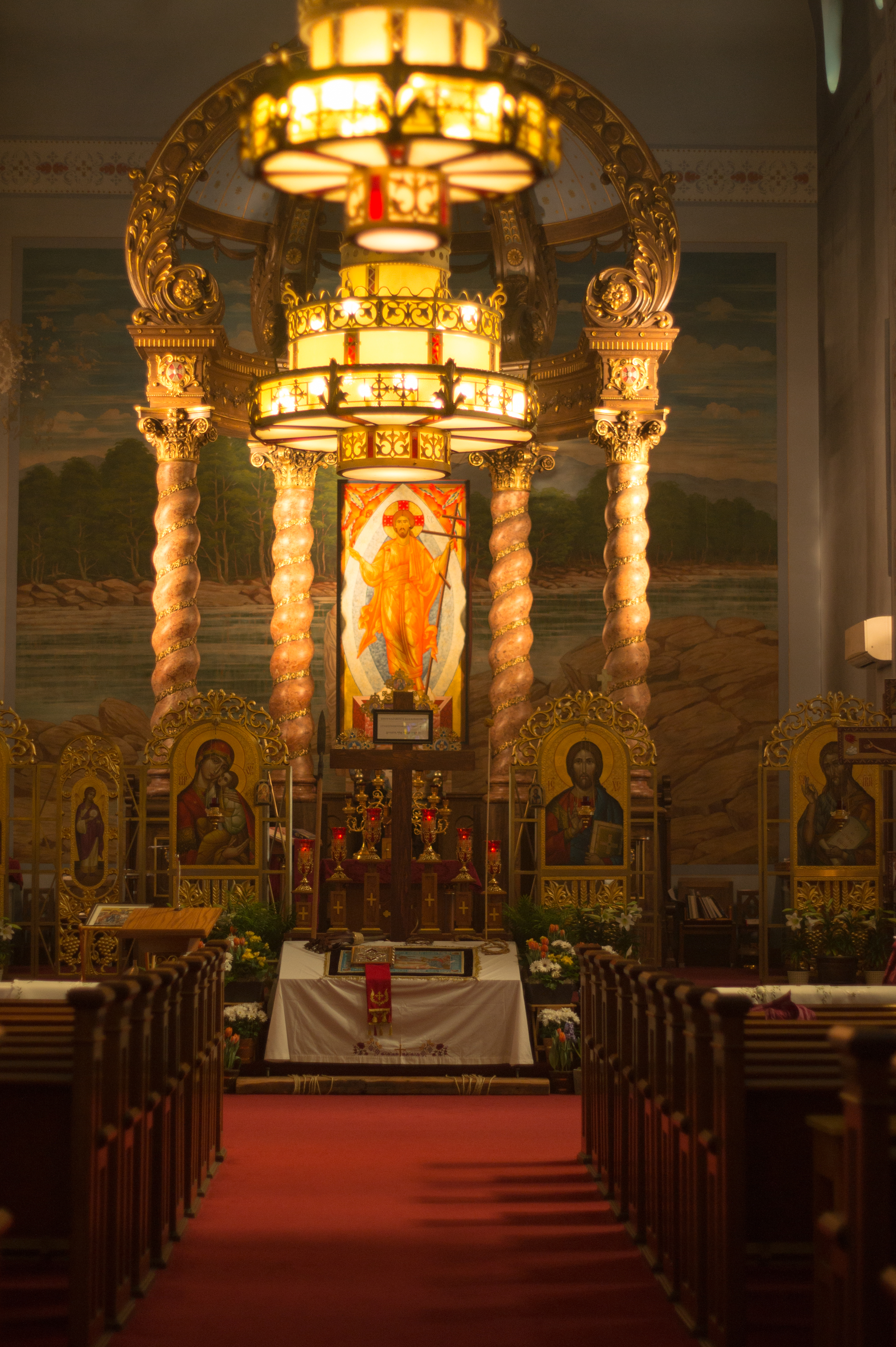
St. John the Baptist Ukrainian Catholic Church has received $200,000 from the National Fund for Sacred Places, a program of Partners for Sacred Places in collaboration with the National Trust for Historic Preservation.
This funding will support repair and restoration of St. John’s central, golden dome and the surrounding roof area. The project is expected to cost approximately $400,000 and matching funds are required by the program. Donations to the project can be made online by clicking "PayPal" button below
St. John’s is one of 30 organizations to receive a total of over $8.7 million in grant funding that provides training, planning grants, technical assistance, capacity-building support, and capital grants to congregations of all faiths.
Since its inception, the National Fund has awarded or pledged over $33 million to 168 community-serving congregations representing 28 faith traditions across 45 states, the District of Columbia, and Puerto Rico. To learn more about this program and this year’s grant recipients, visit fundforsacredplaces.org.
Reader's Vespers
Divine Liturgy
Divine Liturgy
Saturday, December 13, 2025 at 2 p.m.
May 25, 2025.
If you are looking for a spiritual home, consider our Parish Community, which is founded on one of the most important gifts of the Holy Spirit: the fullness of Holy Tradition, just as it was handed down to us from Jesus, to the apostles, to the bishops. Although containing many written documents, Holy Tradition includes the total life and experience of the Church, guided by the Holy Spirit, with all of its elements organically linked together in real life. They cannot be separated or isolated from each other. The Bible is in first place. It is followed by the liturgical life and prayer (public/communal and personal/devotional) together with fasting and almsgiving, the Church’s dogmatic decisions and acts approved by Church Councils, the writings of the Church Fathers, the lives of saints, the church laws, and the iconographic tradition together with other inspired forms of creative artistic expressions (hymns, music, architecture, etc.).
Our Community is open to any Catholic or to anyone else who:
If this is the type of spiritual home that you seek, please
Speak With Our Pastor
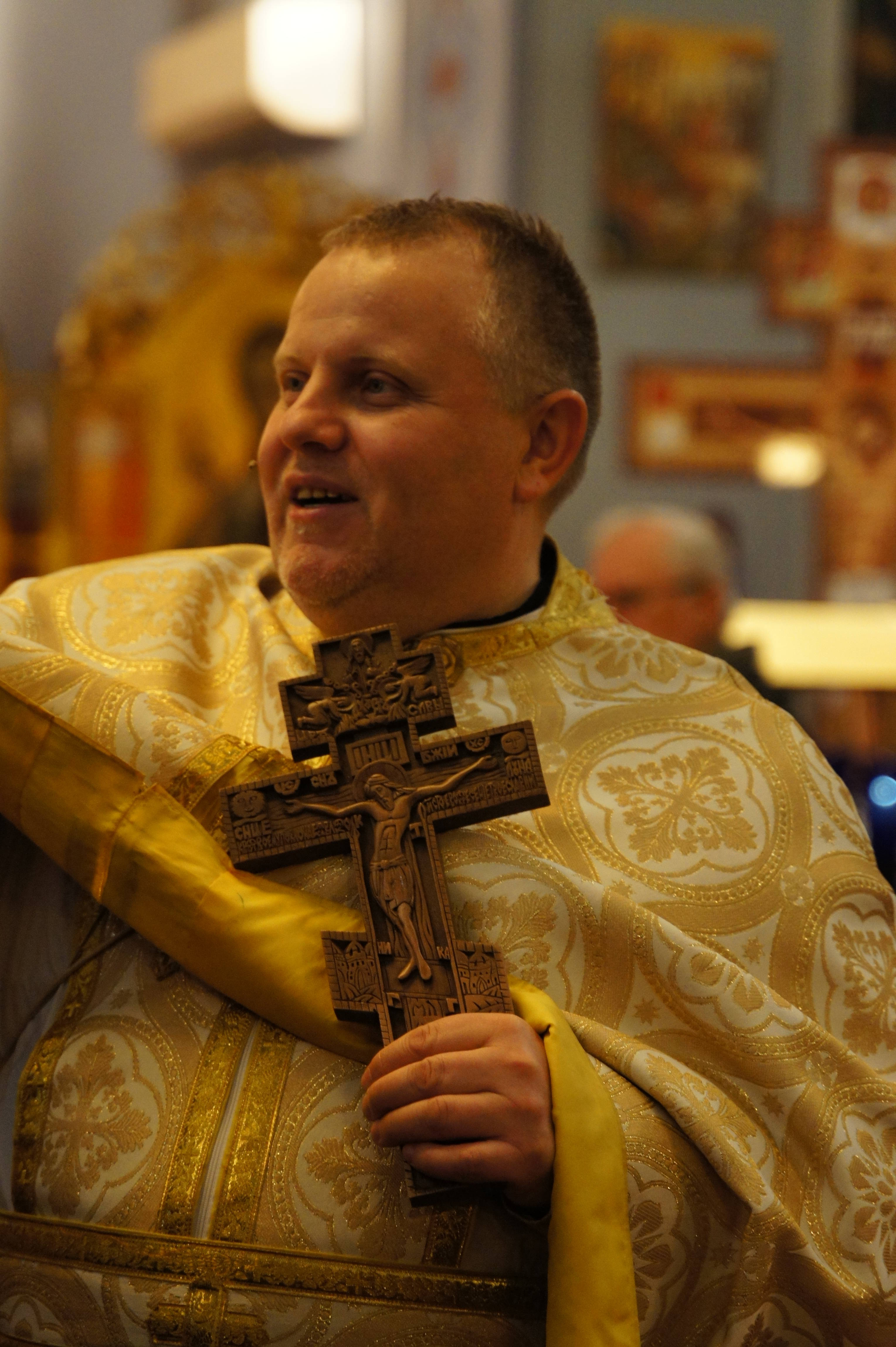
My name is Father Yaroslav Koval. I was born on April 10, 1973, in the Volodymyrtsi village, Zhydachiv area, Lviv region in Ukraine. I was born and grew up in a farming community in a family with two sisters. All the members of my family were active members of the Ukrainian Greek Catholic Church and I was baptized at the age of one month. In 1980, I began my studies in the first grade of Volodymyrtsi elementary school and in 1990 graduated from high school. In the same year I was blessed with a possibility to enter Lviv seminary of the Holy Spirit, where I made my first steps into my spiritual journey. It was a time of many contemplations and sentiments that helped to built up more of my spirituality and faithfulness to Jesus Christ. As a result, I decided to carry on my theology studies abroad.
In 1991-1999, I was chosen to study at the Ukrainian Pontifical College of Saint Josaphat at Rome. In 1992-1994, I studied Philosophy at the Pontifical University Angelicum, graduated and got a bachelor degree in Philosophy. In 1994-1997, I studied at the Pontifical University Gregoriana, graduated and got a bachelor degree in Theology. I went through many spiritual changes and growth during my experiences at seminary. People were always very helpful and cared deeply about my relationship with Christ. They encouraged me to dig deep and to continue to blossom in my relationship with Jesus. After much prayer I decided that I wanted to earn my Masters, and in 1997 -1999 I continued my specialization in Theology at Pontifical Eastern Institute.
In 2001, with God's help, Oksana and I received the Sacrament of Marriage and five years later, we were blessed with daughter Veronica.
On September 2, 2007, I decided to make the next step in my career, and became a deacon by the blessing of Bishop Volodymyr Vijtyshyn from Ivano-Frankivsk and on July 25, 2010 I was ordained to the priesthood. In the same year, 2010, I came to the USA and started to serve in the Eparchy of Saint Josaphat in Parma. For almost 2 years I was an assistant priest at St. John the Baptist in Pittsburgh. From November 1, 2012 I have served as administrator at Saint Vladimir in Arnold, PA and served at Assumption of the Blessed Virgin Mary in Latrobe, PA until recently. On November 1, 2018 I was appointed by His Grace Bishop Bohdan Danylo as administrator at Saint John the Baptist in Pittsburgh, PA.
This is just a small part of my spiritual journey, which hopefully will continue to mold me into the person of Christ that God desires for me to become. I pray that this journey will assist me in becoming a better helper for others, and will help me strive to a better priest and Christian.
Due to Covid 19, we are making some changes. We will sell only frozen
(uncooked) pyrohy to further protect the health of our customers and
volunteers.
To place an order please call: 412-481-5022 on Tuesdays (8 AM – NOON) and Wednesdays (10 AM – NOON)
Church Office Hours: Mondays and Fridays from 9:00 am to 1:00 pm
Church Office Phone: 412-431-2531 (you can leave a message after the beep)
Fr. Yaroslav Koval: (412) 431-2531 (in cases requiring emergency care, listen to the message and connect with Fr. Yaroslav directly using phone number listed in the message)
It's pretty much a compilation of Diamond Jubilee Book, 1967 text.
Another history passage found in St. Josaphat "millennium" directory book, published in 1988.